
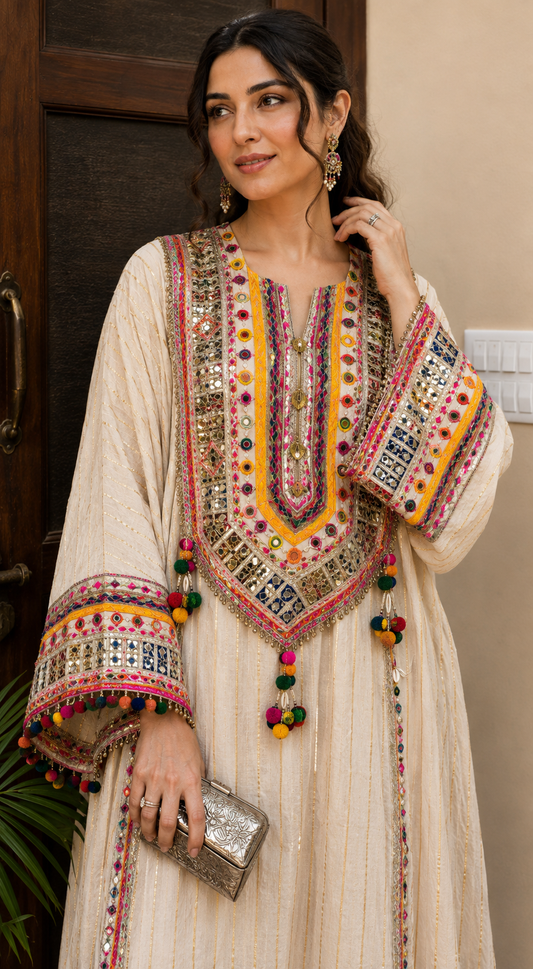

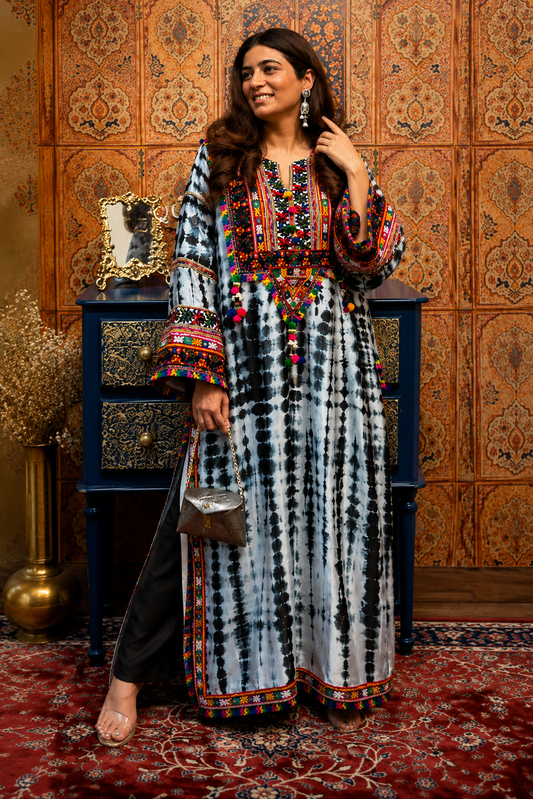


The Ultimate Independence Day Outfit Guide: Celebrate India's Timeless Textiles in Style
"Mere desh ki dharti sona ugle, ugle heere moti..."
Few lyrics capture the spirit of India as beautifully as these timeless words. But these not only define the richness and diversity in countless languages spoken across its states, or diverse religions that coexist, or the festivals that bring communities together, or generations of people who continue to preserve these traditions. But this same richness is woven into India's textile heritage. This Independence Day outfit guide isn't about dressing in saffron, white, and green simply because the calendar says August 15. It's about celebrating the country through something far more enduring: its extraordinary textiles.

Every Chikankari motif stitched in Lucknow, every Banarasi weave born on the looms of Varanasi, every Bandhani knot tied in Gujarat and Rajasthan, every Phulkari bloom embroidered in Punjab, and every Kanjeevaram silk woven in Tamil Nadu reflects generations of artistic excellence. These are not merely fabrics; they are living archives of India's heritage.
Fashion designer Ritu Kumar once observed that Indian textiles are among the richest in the world because they carry centuries of tradition, craftsmanship, and culture. It is this extraordinary legacy that continues to inspire designers, artisans, and women across generations.
This Independence Day is an invitation to celebrate that legacy. Because this Independence Day, the most meaningful outfit isn't simply one dressed in the colours of the tricolour; it carries the spirit of India in every thread.
India's Greatest Fashion Legacy Was Never a Trend
Long before fashion weeks, luxury labels, or celebrity stylists, India had already mastered the art of textile making.
During the Swadeshi Movement, textiles became symbols of resilience. Choosing Indian-made fabrics over imported cloth transformed everyday dressing into an expression of self-reliance and national pride. What began as a political movement eventually became a cultural awakening, one that continues to influence Indian fashion today.
Perhaps that's why handcrafted textiles never truly disappear. They simply evolve with every generation.
As Sabyasachi Mukherjee has often championed through his work, true luxury isn't defined by excess but by appreciating craftsmanship, heritage, and authenticity. That philosophy perfectly captures why Indian textiles continue to resonate with modern women around the world.
Today, a Banarasi saree may be styled with a corset blouse. A Chikankari kurta may be paired with tailored trousers. A Phulkari dupatta may elevate a monochrome co-ord set. Tradition no longer competes with modernity; it complements it. And perhaps that's the true beauty of Indian fashion.
Eight Timeless Indian Textiles That Tell India's Story
1. Chikankari
Originating in Lucknow, this centuries-old embroidery tradition is admired for its delicate floral motifs, intricate threadwork, and remarkable restraint. It proves that elegance doesn't always need embellishment; sometimes, it simply needs craftsmanship.
Cinema has long celebrated this quiet sophistication. Watching Umrao Jaan feels like stepping into a world where every flowing anarkali and softly embroidered dupatta becomes part of the storytelling itself. The graceful costumes reflected the refined aesthetic for which Lucknow has always been celebrated, reminding audiences that fashion can evoke emotion without extravagance.


(Rekha Ji for 4k release of Umraao Jaan Premiere)
(@manishmalhotraworld- The iconic Rekha at the premiere of Umrao Jaan - resplendent in white and gold, in a custom lehenga with a churidar silhouette, echoing the tailored finesse of the 18th century, inspired by the Peshwa. Showcasing custom Lucknowi Chikankari, intricate Badla embroidery, and handwoven gold zari tissue.)
Today, Chikankari has seamlessly entered contemporary wardrobes. Crisp white kurtas, pastel co-ord sets, embroidered sarees, and flowing dresses have transformed this traditional craft into an everyday luxury.
For Independence Day, a white Chikankari kurta styled with silver jewellery, handcrafted juttis, and a handwoven stole creates a look that feels effortlessly patriotic without relying on obvious symbolism. It celebrates India through artistry rather than colour.
2. Bandhani
Bursting with joyful colours and intricate tie-dye patterns, Bandhani has brightened wardrobes across Gujarat and Rajasthan for centuries. Each tiny knot is tied entirely by hand before the fabric is dyed, a painstaking process that transforms simple cloth into vibrant works of art.
Its festive spirit has made Bandhani inseparable from Indian celebrations, and Bollywood has only strengthened that connection. The colourful world of Hum Dil De Chuke Sanam introduced audiences to Rajasthan's rich textile traditions, while glimpses of "Dholi Taro..." still instantly transport us to swirling ghagras, handcrafted dupattas, and joyous celebrations.

(During the iconic "Dholi Taaro Dhol Baaje" sequence, Aishwarya Rai Bachchan's vibrant festive ensembles, designed by Neeta Lulla, beautifully reinterpret traditional Gujarati dressing through Bandhani-inspired blouses, mirror work, and richly coloured dupattas. )

Even today, Bandhani refuses to remain confined to traditional silhouettes. Designers reinterpret it through draped dresses, contemporary sarees, elegant kaftans, and chic suit sets, proving that heritage can be endlessly reinvented.
Perhaps that's why Bandhani makes the most important and most relevant contender for the Independence Day outfit.
3. Banarasi
"Yeh jo des hai tera..."
There is something deeply emotional about returning to your roots. Perhaps that is why Banarasi silk never truly goes out of fashion. It doesn't chase trends; it simply waits for every generation to rediscover its beauty.
Woven in the ancient city of Varanasi, Banarasi silk is one of India's most celebrated textile traditions. Intricate zari work, Mughal-inspired motifs, and luxurious silk have transformed these sarees into treasured heirlooms, lovingly passed from one generation to the next. Owning a Banarasi saree has never been about following fashion; it has always been about preserving a legacy.
For her wedding reception, Anshula Kapoor chose to move away from the expected shimmer of sequined gowns and instead embraced the timeless grandeur of Indian textiles. Dressed in a custom sindoori red Banarasi brocade couture ensemble by Amit Aggarwal, she proved that heritage can feel every bit as contemporary as modern eveningwear. The look was created by reimagining a vintage Banarasi saree into a sculptural corseted silhouette, preserving the richness of the weave while introducing Amit Aggarwal's signature architectural aesthetic.
@anshulakapoor (Anshula Kapoor in custom Amit Aggarwal for her wedding reception)
For an Independence Day celebration, a lightweight Banarasi saree styled with minimal accessories is enough to make a statement. The weave itself becomes the jewellery, the craftsmanship becomes the conversation, and the elegance speaks for itself.
4. Phulkari
Literally meaning "flower work," Phulkari is one of Punjab's most cherished embroidery traditions. Originally handcrafted by women for daughters, sisters, and brides, every stitch carried blessings, memories, and love. Unlike many textiles that were woven for royalty, Phulkari flourished within homes, becoming an intimate expression of celebration and family.
That joyful spirit continues to define Punjabi culture today. Whether in colourful wedding festivities, energetic folk dances, or vibrant Bollywood celebrations, Phulkari remains impossible to miss. Films and music rooted in Punjab often showcase embroidered dupattas dancing alongside infectious beats, reminding us that fashion and culture have always moved together.

Just hearing "Rang de Basanti..." evokes a celebration of colour, courage, and identity, qualities that Phulkari beautifully represents through every vivid thread.
Today, designers have reimagined this traditional embroidery beyond the classic dupatta. Phulkari jackets, capes, co-ord sets, and contemporary overlays allow women to incorporate the craft into everyday wardrobes without losing its cultural essence.
5. Kanjeevaram
Originating from Kanchipuram in Tamil Nadu, these magnificent silk sarees are celebrated for their luminous colours, intricate temple-inspired motifs, and unmatched craftsmanship. Each saree is woven with extraordinary precision, often taking weeks to complete, making every drape a testament to patience and artistry.
Perhaps that is why Kanjeevaram continues to hold a special place in Indian fashion despite changing trends. It isn't seasonal. It isn't fleeting. It simply belongs.
Some of the country's most elegant women, including Rekha Ji, Sridevi, and Deepika Padukone, have repeatedly chosen Kanjeevaram sarees for weddings, cultural celebrations, and international events like IIFA, proving that authentic craftsmanship possesses a timeless appeal that transcends trends.

For a contemporary Independence Day outfit, pair a softer-toned Kanjeevaram saree with heirloom earrings, fresh jasmine flowers, and understated makeup. Sometimes, true luxury lies not in adding more, but in allowing remarkable craftsmanship to take centre stage.
6. Ikat
Created using a meticulous resist-dyeing technique before the yarns are even woven, Ikat is practised across Odisha, Telangana, Andhra Pradesh, and Gujarat. Its distinctive geometric patterns and softly blurred motifs have made it a favourite among designers who appreciate the beauty of understated craftsmanship.

Unlike heavily embellished festive wear, Ikat possesses an effortless versatility. It transitions seamlessly from office meetings to festive lunches, from resort holidays to family celebrations. An Ikat kurta paired with linen trousers or a structured jacket styled over a monochrome dress proves that heritage textiles can feel remarkably contemporary.
Deepika Padukone's wardrobe in Piku celebrated everyday Indian handloom fashion. While not every outfit was Ikat, several of her cotton kurtas and woven separates featured Ikat-inspired geometric patterns and handloom aesthetics. The styling helped make understated Indian textiles fashionable for urban working women.

7. Ajrakh
Recognisable by its rich indigo, earthy reds, and intricate symmetrical motifs, Ajrakh is one of India's oldest block-printing traditions. Every piece is created through an elaborate process involving hand-carved wooden blocks, natural dyes, repeated printing, washing, and drying, sometimes taking weeks before the finished textile is ready.
In an era of instant fashion, Ajrakh quietly reminds us that beautiful things deserve time. Alia Bhatt’s custom Abu Jani Sandeep Khosla ajrakh saree reiterated the influence of Indian craftsmanship on the global fashion industry. Styled by Rhea Kapoor, Alia Bhatt was honoured with the honorary entertainment makers award at the 2024 Joy Awards in Riyadh.

(@aliaabhatt at the 2024 Joy Awards in Riyadh, in custom Abu Jani Sandeep Khosla Ajrakh saree, styled by celebrity stylist, Rhea Kapoor)
Choosing Ajrakh as this Independence Day’s outfit isn't simply about wearing a beautiful print; it's about appreciating the countless skilled hands that keep this extraordinary tradition alive.
8. Kalamkari
Originating in Andhra Pradesh and Telangana, this centuries-old craft uses hand painting and intricate block printing to depict mythology, nature, temple art, and folklore. Every motif feels less like a print and more like a page from India's artistic history.
What makes Kalamkari especially captivating today is its versatility. Whether featured on flowing sarees, elegant dupattas, contemporary jackets, or statement blouses, it effortlessly combines artistic heritage with modern fashion.
Sonam Kapoor was recently seen wearing a beautiful kalamkari and a pistachio and pink baluchari saree by the designer Asha Gautam and styled by her Bollywood stylist sister Rhea Kapoor.

(@rheakapoor- @sonamkapoor wears two beautiful saris draped together in symphony. A kalamkari and a pistachio and pink baluchari based on an old Baluchari from the 19th century as seen in the Met Museum.)
Like every great painting, Kalamkari invites you to look closer. Every brushstroke, every motif, and every border reveals another layer of craftsmanship waiting to be appreciated.
Styling India's Textile Heritage for the Modern Woman
"Vande Mataram..."
Independence Day dressing no longer needs to be limited to white kurtas with tricolour scarves. Today's Indian woman celebrates her roots with confidence, creativity, and individuality.
A Chikankari kurta paired with wide-leg trousers creates understated elegance for the Independence Day outfit. A Banarasi blouse styled with tailored pants transforms heritage into contemporary chic. Layer a vibrant Phulkari dupatta over an ivory co-ord set, or wear an Ajrakh jacket with a minimalist dress for a look that feels both effortless and distinctive.
If you love softer aesthetics, choose a pastel Kalamkari saree with handcrafted silver jewellery. For festive sophistication, let a Kanjeevaram silk speak for itself with minimal accessories and classic styling.
The secret isn't wearing every traditional element at once; it's allowing one exceptional textile to become the focal point of your outfit.
Why Choose Reet Lifestyle for Timeless Indian Fashion?
India's textile heritage deserves more than admiration; it deserves to be worn, celebrated, and passed on.
At Reet Lifestyle, every collection is thoughtfully curated to honour India's extraordinary craftsmanship while embracing the evolving style preferences of the modern woman. From elegant sarees and festive suit sets to contemporary co-ords, kaftans, draped silhouettes, and occasion wear, each design beautifully balances tradition with modern sophistication.
Inspired by India's rich artistic legacy, Reet Lifestyle brings together timeless craftsmanship, premium fabrics, impeccable detailing, and fashion-forward silhouettes that seamlessly fit the Independence Day outfit lookbook. Whether you're drawn to the delicate beauty of Chikankari, the regal elegance of Banarasi-inspired weaves, the festive vibrance of Bandhani, or contemporary ethnic styles rooted in Indian tradition, every piece reflects a deep appreciation for homegrown design.
This Independence Day, Wear India with Pride
"Mere desh ki dharti..."
What better way to conclude than with the very words that began this journey? Those four familiar words remind us that India's greatest treasures have never been limited to its landscapes. They live equally in the hands of their weavers, embroiderers, block printers, dyers, and artisans who continue to preserve traditions that have flourished for centuries.
Every Chikankari stitch, every Bandhani knot, every Banarasi weave, every Phulkari bloom, every Kanjeevaram border, every Ikat pattern, every Ajrakh print, and every Kalamkari motif represents far more than exceptional craftsmanship. Together, they form the foundation of timeless Indian textile fashion, inspiring generations to celebrate heritage through what they wear.
As you curate your Independence Day outfit, look beyond fleeting trends and choose ensembles that honour India's rich artistic legacy. Whether it's a graceful Chikankari kurta, a regal Banarasi saree, a vibrant Bandhani suit, or a handcrafted Ajrakh co-ord set, every choice becomes a tribute to the country's extraordinary craftsmanship.
Because patriotism isn't always expressed through grand gestures. Sometimes, it is woven into the fabric we choose to wear.
Discover the beauty of India's finest craftsmanship with Reet Lifestyle's thoughtfully curated collection of premium Indian ethnic wear. From elegant sarees, regal lehengas, and graceful salwar suits to contemporary co-ord sets, draped silhouettes, and Indo-Western ensembles, every piece is designed to celebrate tradition with a modern touch. As a trusted destination for Indian ethnic wear in the USA and Canada, we bring authentic, high-quality fashion for women, men, and kids right to your doorstep. Explore our latest collections and find timeless styles crafted for weddings, festivals, celebrations, and every special occasion.


