



Dimple Kapadia’s Desi Maximalist Era: Why Her Abu Jani Sandeep Khosla Looks Are Having a Moment
There is something wonderfully refreshing about Dimple Kapadia's fashion right now. At a time when celebrity wardrobes often lean towards quiet luxury and carefully restrained minimalism, Kapadia is embracing the opposite: dramatic silhouettes, heritage craftsmanship, statement jewellery and unapologetic Indian maximalism. Her recent appearances in Abu Jani Sandeep Khosla creations have brought renewed attention to a relationship that actually stretches back decades, and made her a fascinating reference point for the current conversation around desi maximalist style.

The most interesting part? This isn't really a comeback in the conventional sense. Kapadia never disappeared from fashion. Instead, the current moment feels like a rediscovery of a style language she has been experimenting with for decades.
Dimple Kapadia and Abu Jani Sandeep Khosla: A Fashion Story That Began in 1986
Before Dimple Kapadia’s fashion statement looks started circulating across fashion pages, Kapadia had already been closely associated with Abu Jani and Sandeep Khosla for years.
The story began almost as soon as the designers launched their first boutique, Mata Hari, in Mumbai in 1986. According to Vogue India, Kapadia walked into the store just three days after it opened, becoming one of their earliest celebrity clients. Their association subsequently developed into a long-running creative relationship, with the designers dressing her for films and special occasions.
In fact, Kapadia's relationship with the label predates today's obsession with archival fashion. In 1989, she famously wore one of their men's brocade sherwanis with churidar trousers, an androgynous fashion choice at a time when that kind of styling was far less mainstream.
That history makes her latest appearances feel less like a celebrity discovering maximalism and more like a veteran of the aesthetic reminding everyone why it works.

The Jewellery Moment
One of the biggest reasons the recent Dimple Kapadia’s fashion conversation feels so compelling is her jewellery.
At a special Mumbai screening of The Odyssey in July 2026, Kapadia appeared in a custom Abu Jani Sandeep Khosla ensemble consisting of a floor-length jacket, draped sarong skirt and quilted vest. The black satin jacket featured intricate embroidery designed to create the visual illusion of Bandhani, with multicoloured Resham work and Zardozi adding another layer of texture.
But then came the jewellery. The centrepiece was an oversized Talismati pendant, featuring an open eye surrounded by diamond pavé and rubies. Vogue India describes it as an interpretation of Lord Shiva's third eye. She paired it with solid-gold Taweez hoops and stacked gold bangles.
This is where the look becomes particularly interesting. The jewellery isn't simply there to complete the outfit. It participates in storytelling. The pendant introduces symbolism, the gold hoops bring traditional talismanic references into a contemporary silhouette, and the stacked bangles create the kind of visual richness that maximalist dressing thrives on.
The result is Indian fashion without being confined to a conventional ethnic outfit.

What Makes Her Desi Maximalism Feel So Modern?
Maximalism can easily become overwhelming. But Dimple Kapadia's fashion looks demonstrate that wearing more doesn't necessarily mean wearing everything. The trick is intentional excess. Her Abu Jani Sandeep Khosla looks bring together:
● Heritage-inspired craftsmanship
● Sculptural silhouettes
● Dramatic proportions
● Statement jewellery
● Rich embroidery
● Symbolic motifs
● Layered textures
● Unexpected combinations of traditional and contemporary elements
The result is not minimal, but it is considered. That distinction matters.
The designers themselves have described how their aesthetic was once dismissed as “too loud.” In a recent Vogue India interview marking their 40th anniversary, Sandeep Khosla discussed how their maximalist approach eventually became part of the label's identity. The duo has consistently challenged the idea that Indian fashion needs to be restrained to appear sophisticated.
Kapadia happens to be an especially natural person to carry that philosophy because her association with the label goes back to its earliest years.
The Bandhani Illusion That Turned Craft Into Couture
Perhaps the most fascinating detail in her The Odyssey look is the Bandhani-inspired embroidery.
Rather than using conventional tie-dye Bandhani, the black jacket uses tiny embroidered squares to recreate its visual language. Resham and Zardozi embroidery further build up the surface, turning a familiar Indian textile reference into something distinctly couture.
That approach reflects something central to Abu Jani Sandeep Khosla's design history: taking Indian craft traditions and interpreting them through new techniques, fabrics and silhouettes.
The designers have spent decades working with crafts including Chikankari, Bandhani, mirror work, gota and other forms of embroidery. Their recent anniversary celebrations have also revisited archival ideas rather than simply reproducing them.
This is why Dimple Kapadia's fashion looks feel relevant to the current fashion conversation. They are rooted in Indian craft, but they don't necessarily look like traditional Indian outfits.

And Then There Was Mubarak Bagh
The Dimple Kapadia’s fashion story gained another chapter during Abu Jani Sandeep Khosla's 40th anniversary celebrations in September 2026.
The designers opened Mubarak Baug, their new flagship in Mumbai's historic Framjee Cawasjee Institute building in Dhobi Talao. Vogue India describes the approximately 20,000-square-foot space as a maximalist environment combining art, archival fashion, craft and high jewellery.
Kapadia was among the familiar faces associated with the celebration. Coverage of the anniversary event shows her in an ivory ensemble featuring a flowing skirt with saree-like front pleating, another example of how Indian silhouettes can be reworked without losing their cultural familiarity.
The setting itself seems almost perfectly aligned with the aesthetic being celebrated: heritage, ornamentation, craftsmanship and visual abundance.
Why Archival Fashion Matters to This Moment
The renewed fascination with Kapadia also arrives at a time when fashion is increasingly looking backwards.
But archival fashion isn't simply about copying something from the past. The more interesting version involves taking an old technique, silhouette or design idea and allowing it to exist differently today.
Abu Jani Sandeep Khosla has repeatedly done exactly that. Their history includes the revival and reinterpretation of Chikankari, while their work has also revisited techniques such as crushed fabrics, Bandhani-inspired embroidery, mirror work and gota. Vogue India recently highlighted how their archival language continues to inform contemporary creations and anniversary collections.
Dimple Kapadia's fashion wardrobe makes that philosophy particularly visible because she has been part of the story for so long.
She isn't wearing archival fashion simply because it is fashionable again. She is wearing pieces from a design language she has lived alongside.
The Dimple Kapadia Fashion Lesson
There is a bigger style lesson hiding underneath all this embroidery and jewellery. Indian dressing doesn't have to choose between traditional and contemporary.
You can wear a heritage-inspired motif with an unconventional silhouette. You can pair an elaborate embroidered garment with sculptural jewellery. You can take inspiration from Bandhani without wearing conventional Bandhani. You can embrace gold without making the entire outfit look bridal.
And you can make maximalism feel personal rather than costume-like. Kapadia's recent looks demonstrate this beautifully because they don't appear designed around chasing a microtrend. They reflect a long-standing relationship with Indian craftsmanship and a willingness to let clothing, jewellery and personality occupy the same frame.
How to Bring Desi Maximalism Into Your Own Wardrobe
You don't need couture to experiment with the aesthetics of Dimple Kapadia’s fashion looks. Start with one statement element.
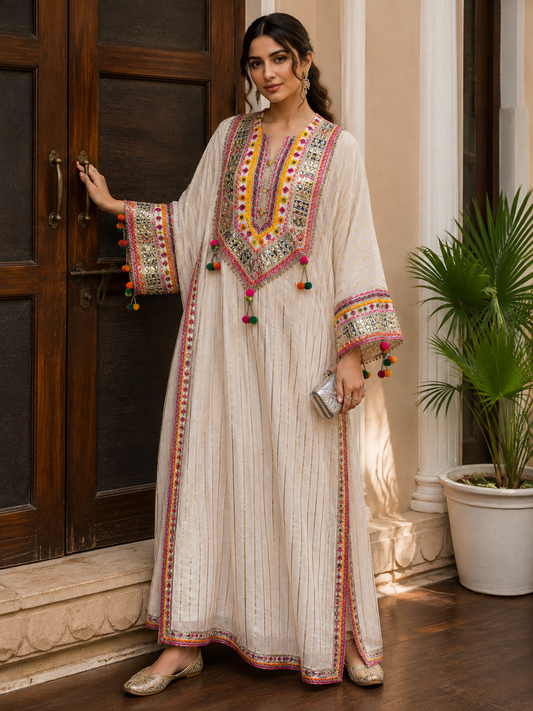
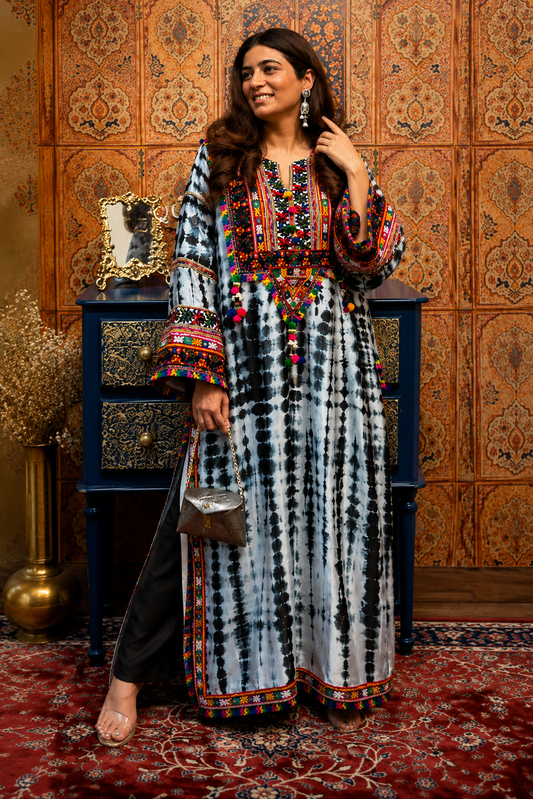
Try a heavily embroidered kurta with understated trousers. Pair a simple saree with oversized earrings. Add stacked bangles to an otherwise clean outfit. Choose a jewel-toned dupatta with a relatively minimal kurta. Or let a traditional textile-inspired print take centre stage with contemporary tailoring.
The key is to create contrast rather than clutter. If your outfit is heavily embellished, your accessories can be more selective. If you're wearing dramatic jewellery, keep the rest of the styling intentional. And if you're embracing colour, allow one shade to anchor the look.
That is the difference between simply adding more and actually understanding maximalism.
The Real Dimple Kapadia Resurgence
Calling this a Dimple Kapadia “resurgence” is tempting, but perhaps the more accurate description is a fashion rediscovery.
Her recent Abu Jani Sandeep Khosla appearances have reminded audiences that her style has always had room for experimentation. From the brocade sherwani she wore in 1989 to the Bandhani-inspired couture and symbolic jewellery of 2026, the through-line is remarkably clear: she has never needed minimalism to look modern.
And perhaps that's exactly why her current fashion moment feels so relevant. When fashion cycles back to heritage, maximalism and craftsmanship, Dimple Kapadia doesn't have to reinvent herself to fit the mood. The mood has finally caught up with her.
If the latest Dimple Kapadia's fashion looks have you reconsidering the power of statement Indian fashion, explore ways to bring that same spirit into your own wardrobe. From expressive ethnic silhouettes to jewellery and occasion-ready pieces, Reet Lifestyle offers Indian fashion designed to move comfortably between heritage and contemporary style.
Discover pieces that let you celebrate your own version of desi maximalism, whether you're dressing for a wedding, festive celebration or simply feel like making an ordinary day a little more extraordinary.


